Monday, 14 March 2016

Shelter an exhibition at Kirkcaldy Museum and Art Gallery

Shelter 

5th March 2016 until 5th June 2016

@ Kirkcaldy Art Gallery and Museum 

part of Scotland’s Festival of Architecture 2016

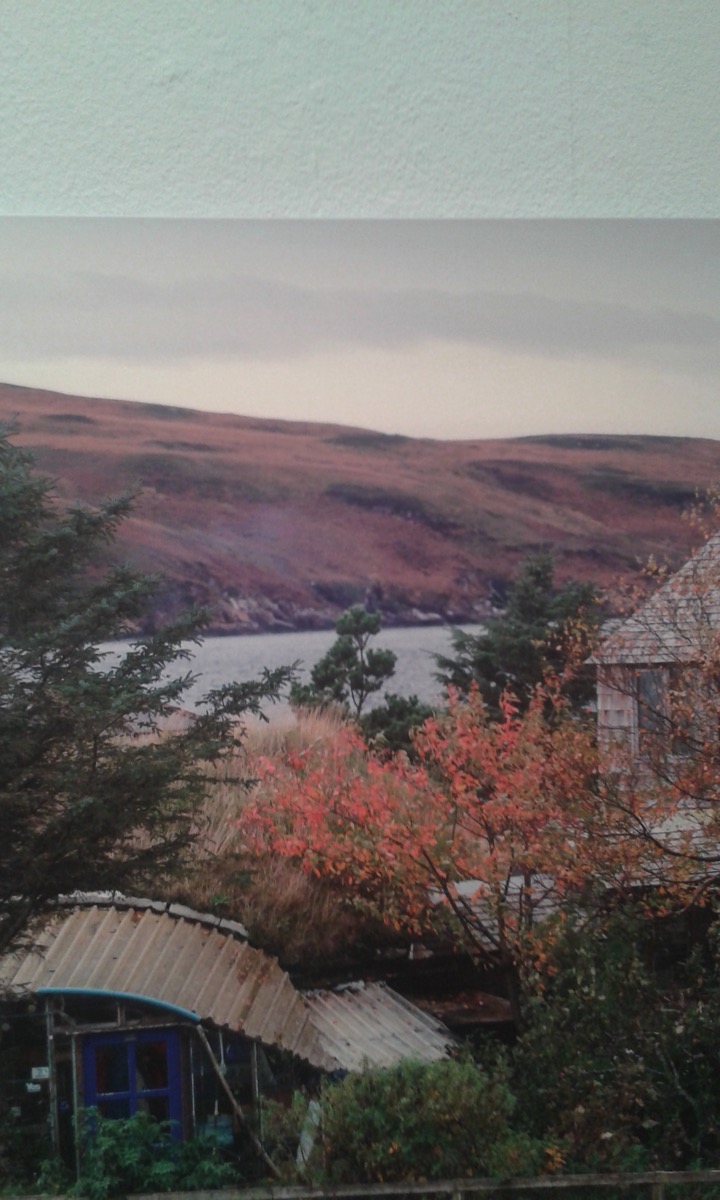
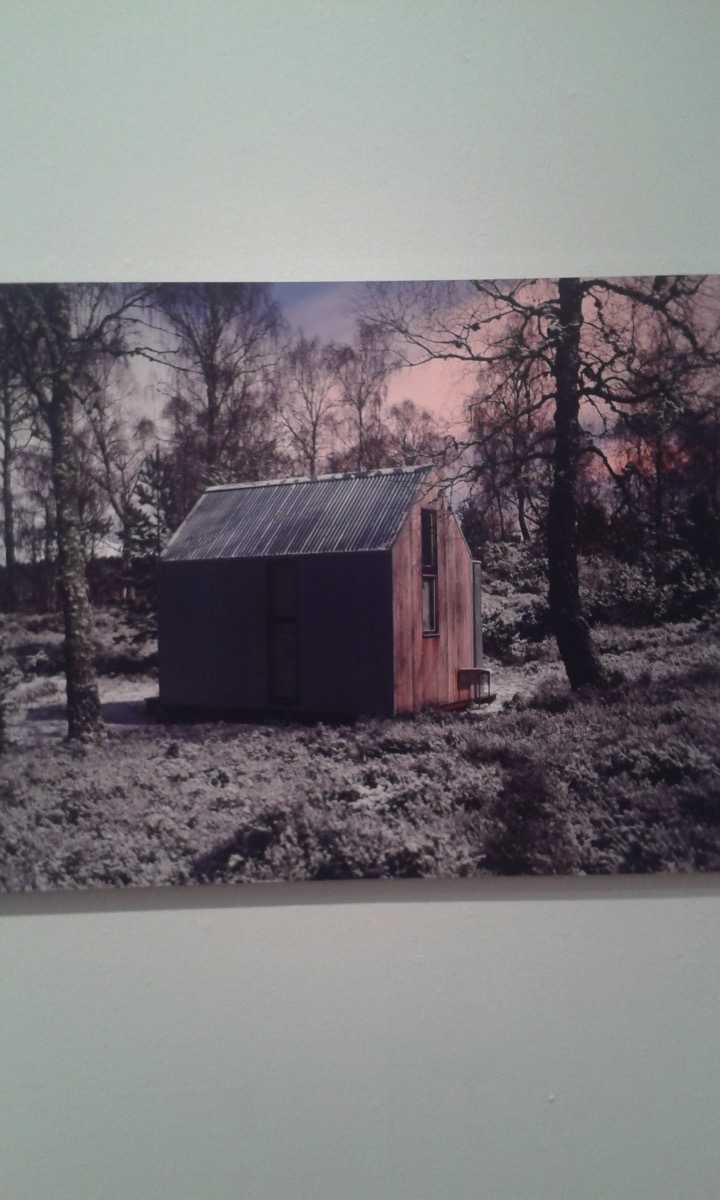
This is an exhibition of two parts, one gallery includes images from the publications of Lloyd Kahn, editor in chief of Shelter publications in California. Along with Buckminster Fuller and Stewart Brand he was an early advocate of the benefits of geodesic domes, though he later recanted his position with a further publication on how impractical they were. The images are from around the world and show some fairly extreme shelters nestling in some at times pretty inhospitable places, along with some stories of people for whom the home comforts need be little more than a roof and some walls. A collection of his books is also available for browsing. In case you have not guessed there is a strong whiff of the American West coast counterculture. 

The other gallery consists larger more glossy photos of a variety of Scottish shelters (I think) some are ad hoc galleries, some seem to be more reflective spaces and some are the sort of places where readers of Permaculture magazine might aspire to dwelling. There is also a strange concrete castle thing on top of a very rocky promontory that seems to be some sort of striking art statement. 

This is certainly not hipster Apartment Therapy territory, these are shelters at their most basic, that are totally in tune with their environment, having largely been crafted from things picked up along the way. It is a thought provoking and inspiring exhibition that is proving popular with visitors.

2016 03 14 14 14 52


2016 03 14 14 15 05


2016 03 14 14 15 20


2016 03 14 14 13 13


2016 03 14 14 13 38


2016 03 14 14 13 48


Sunday, 6 March 2016

Nobody's Home an exhibition by John Maher

Nobody's Home

John Maher Photographic Exhibition

26th Feb 2016 until 10th Apr 2016

@ Andrew Carnegie Museum, Dunfermline


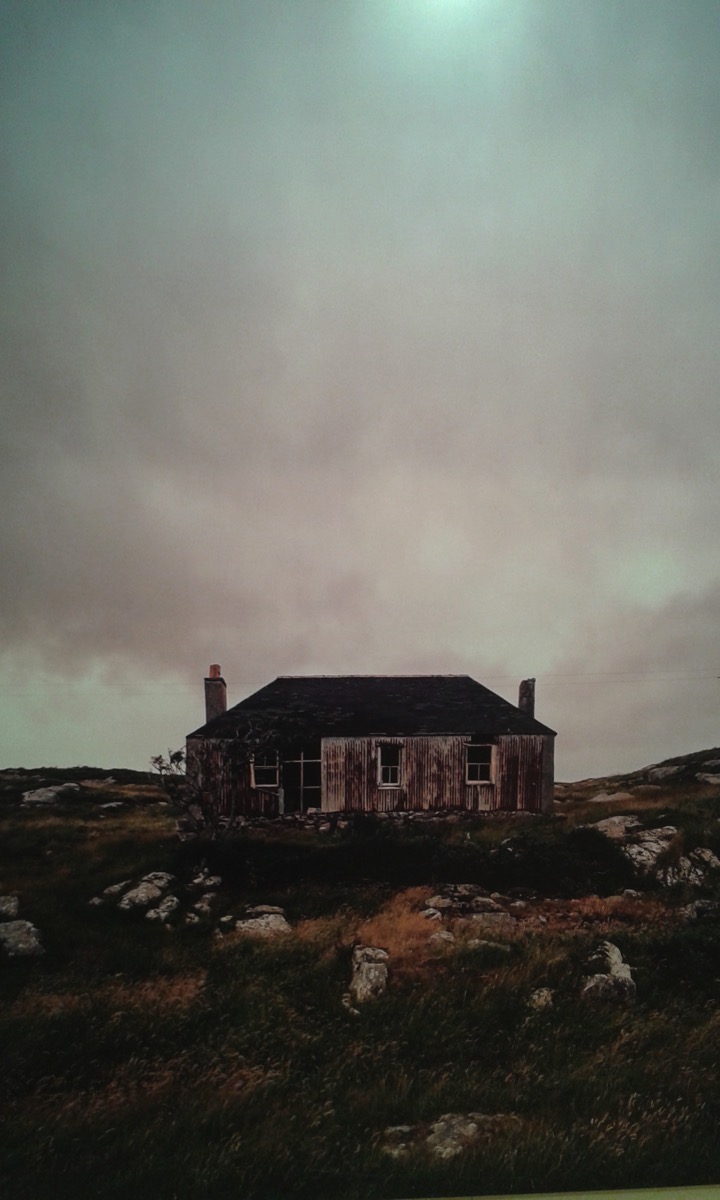
This is a wee gem of an exhibition, around twenty photos of abandoned houses on the Isle of Harris taken by former Buzzcocks' drummer John Maher. The island is so remote, and houses so isolated that they are often closer to the sea than they are to a road. Accordingly when the residents finally come to stop living in these houses, there is little demand for them, and even getting a removal van to the door can be impractical. So the when the hardy souls that have lived there move on, they seem to simply be abandoned. Furniture can be left and the door is closed. Time passes, sheep shelter in the living room, the ceiling falls in the kitchen, but like a church that is always left open, there is something that compels those passing by to treat these relics with respect.


2016 03 01 10 58 152016 03 01 10 58 47

2016 03 01 10 57 37

2016 03 01 10 57 50

Sunday, 7 February 2016

A guide to the 21st century - film

[another imagined look back to the twenty first century from some far century, this time looking at the art of film making]

Iu

Although it was not recognised at the time, the 2003 film Timecode by Mike Figgis was the harbinger for the style of film making that we now take for granted.

The use of split screen had appeared sporadically before, and the Zbigniew RybczyƄski Oscar winning short film Tango certainly played with the notion of repetition within a frame.

However it was only during the 2030’s that entire duration multiple screen films became commonplace. Prior to then consumers had had to create their own personalised multiple screen effect for themselves. Although evidence is inevitably hard to come by, as the quotidian is typically undocumented and unrecorded, it would appear that those who were nominally watching a single screen would routinely, at the same time, employ various other screens to access other entertainment as well as information on the film that they were seeing, engage in electronic conversation with others who were watching, or had watched, the film, as well as, the constant ongoing checking of social media and other data sources.

Clearly the consumer had an appetite for a far greater volume of data and complexity that the film industry was apt to present them with. For consumers, a single narrative thread over a nearly two hour typical duration, without user interactivity or responsiveness was proving increasingly un-engaging and unsatisfying. Consumers were already creating their own workaround for this frustrating shortcoming, so when more immersive filmic experiences were finally available consumer tastes were already surprisingly advanced.

The time had clearly come for the routine presentation of films in a multiple screen format, with at least one strong narrative thread on display at any one time, or at times multiple narrative threads. Consumers proved surprisingly adept at coping with what might previously have been seen as information overload. Techniques such as the classic format of quick slow, quick slow, were used. This offered a quickly paced narrative thread and a slowly paced narrative thread, alongside a more decorative, perhaps repetitive or irrelevant, element that was quickly paced and one that was more slowly paced. In addition there would be multiple areas of running and sporadic text visible. Therefore the consumer always had a myriad of primary and secondary focus options before them. It is not clear whether consumers had always had the capacity and desire to consume this level of data, or whether it was a reflection of the modern way of living whereby it became a commonplace to be constantly connecting, engaging in multiple conversations across multiple social media applications.

Not content with multiple visual screen sectors, consumers wanted a more immersive and challenging filmic environment, one that presented more options, depth and breadth. Interactivity during the film allowed for additional relevant information to be accessed, previously additional commentaries had been provided, but enjoyed relatively little popularity. The new films allowed for a depth of engaging information to be presented during the duration of the film.

Additionally, consumers were already well familiar with algorithms being used to suggest material that they would potentially like, engaging with their established tastes and preferences, while also at times, adding a degree of challenge. It was now possible for film makers to provide multiple narratives, character viewpoints, endings, etc, and for the consumer to be seamlessly presented with the option most likely to engage and amuse them.

It was however clear that the narrative convention and commonality of experience had to be sustained to some degree. So, at initial viewing, the viewer must be able to retain their engagement with the narrative, and not constantly feel that this was being undermined or that key narrative outcomes were being disclosed in advance. In order to be a satisfying filmic or fictional experience it is necessary to be able to immerse yourself in an engaging fiction, and for the key elements of that fiction to be maintained throughout, and amplified by the resolution of the narrative. However this did not require that the same narrative arc was constantly and repetitively deployed, although this was certainly common. Fresh and innovative structural approaches were adopted, and where these were sufficiently novel, they often proved remarkably successful and durable. An enduring aspect of a truly successful work of art has always been that it is sufficiently distinctive to be memorable, but sufficiently familiar to be recognisable.

Extensive testing was undertaken in advance, and fine tuned post release, to ensure that despite each consumer accessing their very own bespoke version of the film, it was in many key regards a common experience to a wide variety of users. A consumer might therefore watch a film in a film noir style, with a score in the style of Massenet, and their preferred female lead actress, with a conclusion that was clever, but emotionally unsatisfying, while their partner might have seen a film in a stylised Kabuki style, with a minimalist score, and their preferred male lead actor, with a conclusion that was emotionally resonant but clearly unlikely. However they had both clearly engaged in a very similar shared experience that could easily and pleasurably be discussed.

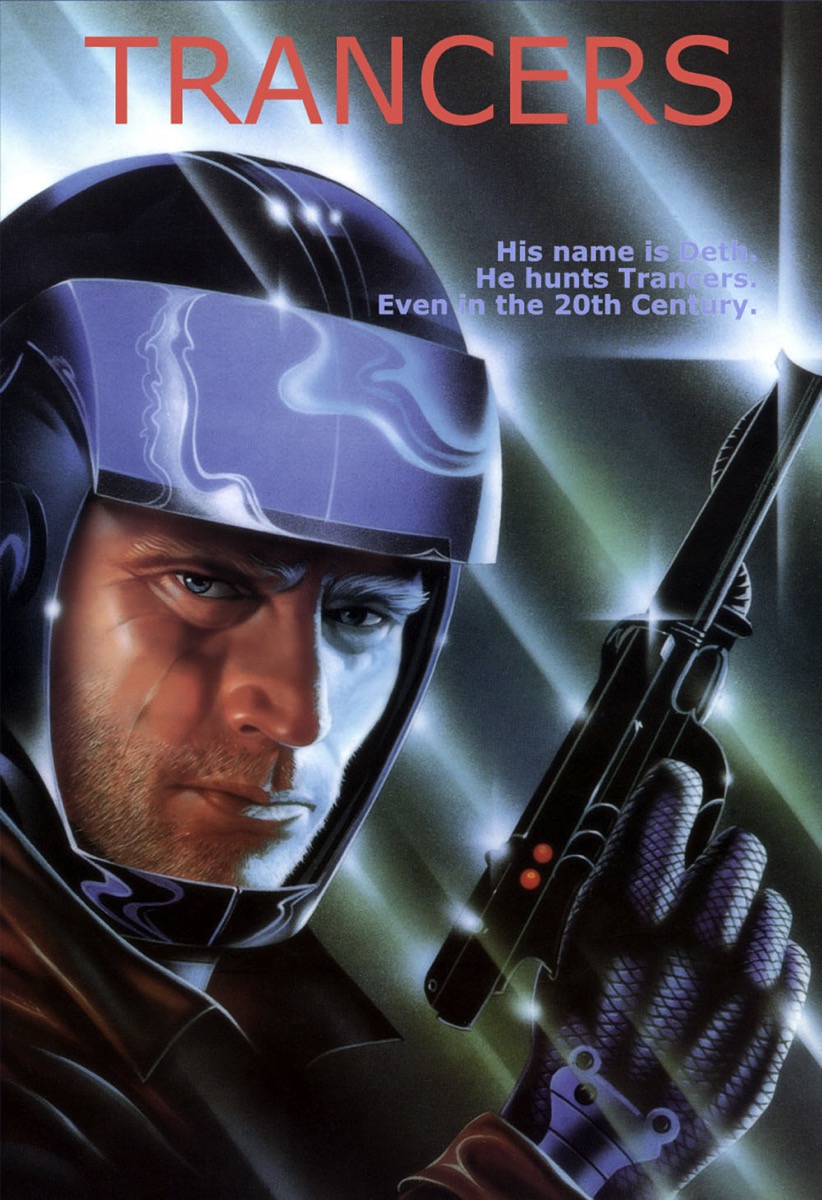
It was argued by some that this level of information load, and rapidity of pace, led to a focus on novelty and speed at the cost of genuine emotional resonance and meaning. It is however widely recognised that the consumption of culture is specific to the culture in which it is consumed. Just as we cannot truly recreate the experience of hearing a Beethoven symphony conducted by the composer, with a nineteenth century orchestra now, nor can we recreate the experience of watching a twentieth century classic such as Trancers with a cardboard box of stale popcorn sitting on a folding seat in a local fleapit.

Finally, the irresponsible disclosure of spoilers was rightly recognised as the major social challenge of the century. Initially it was thought that technology might be the answer. Rigid technology locks were applied so that narrative outcomes were not disclosed to people in advance. However public attitudes hardened and penal reform was clearly called for. In 2060 many countries introduced a mandatory prison sentence for blatant disregard of local spoiler disclosure conventions, the so called Spoiler Laws. Over the years average sentences for these offences were increased, and eventually they were one of the few offences to attract a near life sentence. However the death sentence for disclosure of spoilers was not yet widely present.


Sunday, 17 January 2016

Snow

This is a seasonal short story from my upcoming collection Losing Definition - enjoy 

2016 01 16 16 26 34


Snow

It is a whole different kind of cold when it passes ten degrees below, perhaps twenty or thirty degrees below is different again, but I don't want to know.

The house heating was cranked up as high as it would go and the house was still cold. The temperature was borderline bearable in the one room, elsewhere was only suitable for a quick, heavily dressed dash. All this heating was costing a fortune, but without it the water would freeze in the pipes and rip them apart. We had had bad winters before, and year by year, we had prepared for them. Every autumn the house maintenance was scrupulous, cleaning out the rhones, checking the tiles, the gutters, fixing the harling, refilling the holes that freeze and thaw might pop open. There was a stock of emergency supplies in the loft, plastic sheeting, duct tape, paraffin lamps, Tilley lamps, a mighty lamp that ran off some sort of compressed petrol that hisses and spits but produced as much light as a hundred watt light bulb. The thin stylish curtains, on thin stylish curtain rails had all been replaced by plain heavy lined curtains on hefty curtain tracks. Year on year the house was more and more prepared for winter. Likewise ourselves, year on year, a breakfast of porridge, moleskin trousers, hiking boots and gaiters.

That year I had got myself a heavy felt Russian Red Army Ushanka hat, with flaps that came down and covered my ears, it took ages to arrive, posted all the way from the Ukraine. When I got it it felt a bit tight, the Russians must have tiny heads, it was the second biggest hat that they had and it was still tight on me. But with a couple of good soakings, and pulled down tight over my head, over time it moulded itself to fit just fine. It meant that I could fit my headphones into my ears, and listen to sturdy Russian orchestral music while I walked, without the wind whipping past, diluting the sound.

When I was heading into work normally I stood at the far end of the railway platform, waiting for the train, but in this weather I arrived slightly early to get a seat in the small uninsulated waiting room on the platform. Wedged in the corner I could keep an eye on the announcement board. You could never quite tell what was happening, the train might be late, or cancelled, or might even be on time. Best to try and cater for all eventualities, plot some path between the possible options that expends as little effort as possible. In winter always stay as dry as possible, and as warm as possible, for as long as possible.

That morning the train was on time, but it was already packed, presumably earlier trains had been cancelled, so the usual travellers had accumulated on the 7:57. The train was short of carriages so we were standing before we even left our station, but at least we were on the train. We called at a few more stops before the bridge, people trying to get on the train were shouting down the carriage for people to move on up the train. We were leaving people standing at every platform after ours, a throng of people pressing against the steamed up glass windows of our train, peering in, at us peering out.

It had been this cold for weeks, but this was the first of the real snow. It fell in that dry powdery way that it does when it is really cold. Not that fluffy stuff that you can make snow men out of, that you can bundle into a snow ball and throw at someone. Dry powdery stuff that drifts for miles and piles up against anything vertical. I could overhear the conversations of other passengers, text messages were coming in from people on platforms and the trains that were up ahead of us. The road bridge had closed, the rail bridge still seemed to be open. Buses had stopped, cars were getting stuck in drifts.

It was eerie crossing the rail bridge, all smothered in falling snow, we could not even see the sea beneath us, just the half light of snow falling all around us, a floating shimmering ephemeral wall. It was like being out on a misty day, you felt somehow naked and alone in a familiar place. It was just after crossing the bridge that the train stopped in a cutting. We tried to make the best of it, I suppose that is what they used to call the Blitz spirit, people spoke to those they were standing next to, just offering whatever help or comfort they could.

There was no point in getting angry or annoyed, the journey was an ordeal to get through and you could not afford to waste the energy when you had no idea of where you would end up. The railway cutting must have cut off the signal for mobile phones, the overheard updates from platforms and preceding trains had stopped, to be replaced by just speculation. I did my best to make myself comfortable, standing propped up against the edge of a seat. We obviously were not going to be going anywhere for quite a while, so I loosened my grip on the overhead strap.

It was obvious that no one was going to get to their work on time, indeed it was obvious that as soon as we got to our destination our first thought would be where we could stay the night, or how to get back home.

After an hour or two the guards on the train opened the doors, the men started to take turns and head back down the tracks to urinate against the basalt sides of the cutting. The snow stained yellow and a gentle steam rose briefly in the chill air.

Smokers of both sexes huddled miserably together, united in their plight, before chucking their dog ends down the short gravel incline. In the cutting it was quiet, there was not much wind anyway. Some snow was finding its way down to us, but the angle of the cutting seemed to be protecting us from the worst of it.

I had got off the train for a pee and there was a group of figures that seemed to be particularly purposeful, so I headed towards them. We were all heavily covered, various assortments of winter wear, skiing wear seemed particularly popular this year, but there were also Barbour jackets and quilted jackets too. Everyone was wearing a hat, and most of us were wearing scarves over our mouths, a few even had ski googles. I recognised the tallest of the figures, he was a regular commuter on the train, I had probably sat next to him hundreds of times but we had never spoken. He wore a dark quilted jacket and a ski hat with a fleece face mask and googles. His boots were that orange leather colour with bright red laces, and a bulging tongue. He was saying that we should just walk on from here, we could cut onto the motorway after a short distance and head back home from there. While the roads were probably impassible for traffic, it should be relatively easy to walk the short distance involved. There was some macho agreement amongst the heavily wrapped figures about the shortness of the distance and the feebleness of just waiting.

On a whim I decided to go with them, there was no word of when the train would start moving and I was getting bored of squeezing into a cold damp corner of the train with all the other commuters. There were half a dozen of us, we headed up along the gravel track for the length of the train, as we headed past the front of the train, we heard the driver shouting at us. He must have wound the side window down, he sounded pretty annoyed, but not annoyed to get out of the train. For a moment I worried about electric rails, or getting my foot caught in points, but we came out of the cutting into the open without any drama. The wind cut through us, stabbing at any exposed flesh, and finding its way to any warm flesh beneath the layers. The tallest man was at the front, and we instantly sorted ourselves into single file behind him, the snow had covered the railway tracks, but the rough layout of the landscape was still visible.

Now I wished that I had paid more attention to what had passed my window so many times before, now I could not remember what was under the snow at all. The motorway and the railway line cross over/ under each other at different points, I honestly could not remember whether it was left or right that we needed to turn to reach the motorway. The figure at the front turned left, and I did not disagree strongly enough to do anything about it. He sped up slightly down the slope, and then stepping sideways up to the wooden fence. Heavily wrapped in layers the fence was a trickier obstacle than I would have believed possible. In turn we fought our way over it, I landed heavily on the far side of the fence and turned to try and help someone.

The wind was accompanied with snow now, within the field the snow was already up to my knees, and it seemed to be deepening quickly. We were taking it in turns to take the lead, pushing aside and trampling the snow was too exhausting a task for anyone to cope with it for long. Too quickly it was my turn to lead, after stumbling at the task, I found a rhythm of jumping slightly and then letting my bent knee half push aside half flatten the snow before me. No sooner had I pushed forward a bit, than the others hungrily followed me. A tap on my shoulder indicated that I needed to straighten up the path I was cutting. I was out getting out of breath and the cold air was tearing at my throat.

The field felt endless, with neither beginning nor end, a vast endless expanse of white that hurt your eyes to see.

My initial energy and enthusiasm had been completely exhausted, the wet was seeping through everything I wore and I could feel myself slipping into grim survival mode, resolute and determined. I was dead already, but I would just keep going on out of sheer cussedness. There was a change of lead and we stopped. After a few seconds of standing still I pushed a path through the snow and stood with the others. We formed a small huddle, each instinctively facing away from the oncoming wind. I pulled back the scarf that covered my mouth. The person in the blue ski jacket who had taken the shortest spell at the lead was not happy, they wanted to us to all head back. Her red bobble hat bobbed up and down seriously. I could not see much of her face behind the colourfully tinted ski goggles, in fact from appearance alone I could not be certain it was a she, but it was a woman’s voice. No one was exactly keen to head on further, this was rapidly turning into a bad case of all the gear and no idea. All this winter clothing had looked fine in the shop but in real life we were struggling. Trying to walk through snow that was now half way up our thighs it was obvious that our clothing could not protect us from the sheer numbing pain of extreme cold.

We argued, well most of us just stood there too cold to think, the tall man wanted us to head on, the woman wanted us to head back. It seemed common that no one would want to go forwards or back alone. Nothing was agreed by our huddle, the woman headed back along the path that we had cut. Looking back along the path, it was starting to fill up again with snow, and was far from straight, but heading back looked relatively achievable, we had managed to come this far, going back surely could not be too bad. A few others headed back after her, there were just three of us left, we said nothing, well nothing that I heard, and headed on. By now we were no longer walking on the ground beneath, the snow was thick enough that eventually it just compacted enough to support you. The rhythm of trying to walk through the snow, was just part of the larger rhythm of taking turns to lead. The snow was thick around us, there was no obvious direction to head, no sun to orientate us, no landmarks to mark the horizon.

We must have crossed fences without realising, progress was slow but we were covering the ground, it was just that we did not know what ground it was or where it was taking us. We each retreated into ourselves, the exhaustion starting to make us feel elated, until the leading person fell. Not just stumbled, we did that all the time, but fell, like you knew it was bad. He was bleeding, the snow was streaked with red, after so long with just ourselves and the white of the snow, it gave you a jolt to see colour again, like that. He had must have torn his leg on a barbed wire fence somewhere in the snow.

He could not walk, he just lay there, we pushed up the snow to shelter him as best we could. He lay there looking tired and half dead, watching as the red snow expanded out round him. I did my best to make him comfortable, and holding his face between my mittens looked at him, he was looking at me, but I could tell he was not really listening or seeing. I looked him in the eyes and told him that we would be back with help. We both knew that I was lying and did not care. With my sole remaining companion both of us stepped gingerly over the barbed wire and headed on.

There were just the two of us then, it was like fighting your way up a sand dune that was slipping down against you. All the time, the wind was hammering into you. After a while the pain orientated you, we were not heading in any particular direction anymore, just walking because stopping would mean something else. I could see my companion, and counted another, sometimes ahead of us, sometimes behind us, white on white, I struggled on because I was too stubborn to lie down and die, …

We had been climbing for so long, when climbing turned to falling, I felt weightless for a moment, the sudden silence and stillness was like being immersed in some new element, I could see an arm in a heavy jacket, and thought how strange it looked, and slowly recognised it as my own arm. Things were happening that I was too tired to understand, I was made out of ice and I was starting to melt, I was starting to fall apart like all that snow and ice that gets tramped into the house on your boots, there was no wind, it was quiet, quiet in a way that was feeling increasingly oppressive.

***********************

I understand now that we must have been walking in circles for hours, we were not far from the train, but had stumbled upon a farm building tucked out of sight of the railway line, the farmer had used a tractor to keep the ground in front of his farm house clear, the snow was banked up, and we had walked up one side and fallen down the other as he was looking out his farm house window. He was a stout fellow, wiry in the way that farmers often are, grabbing us by the scruff of our coats and pulling us in, like he would manhandle a recalcitrant sheep.

The train we had left was still waiting in the cutting when the wind shifted and the snow toppled in half filling the cutting. With the carriages half submerged in snow, there was little they could do as the carriages got darker and darker as the snow rose up entombing them. Perhaps it never occurred to them that it could just keep on snowing. So many people died that day, too many to count.

That is all a long time ago, it seems ridiculous now that we could all have been so unprepared. The glass roofs on the railway stations and the holiday caravans on the estuary coast are all gone now. This is a cold hard world now, perched on the snow and ice, scraping through the seasons.

Saturday, 15 August 2015

why digital natives don't care about hard drive sizes

My first computer was an Apple laptop, a powerbook 165c. However it was better known as a 4x80, that is it had four megabytes of ram and eighty megabytes of hard drive. Obviously those figures now seem ridiculous, a mobile phone is probably better specified. I am typing this on another Apple laptop (my third) with 8 gigabytes of ram and 250 gigabytes of hard drive.

Accordingly I belong the that generation that tends to classify a computer by the ram and the hard drive. The maxim being that you cannot have too much of either. However I suspect that for those who have grown up digital, used to a perpetual ever accessible wifi signal, constant internet, instant twitter, instagram etc etc, these old metrics are of little interest.

The tendency now is to have each device as a mere portal to your online identity, so you can access the same apps and data on whatever you are sitting at, or happen to have in your hand. In the Mac world apps will run on iOS and Mac OS, there might be some data on the device, but the parent data, the true data, that is all in the cloud, available for download.

The idea of taking a load of photos with a camera and storing them on your hard drive is just alien to such digital natives. The idea of having documents on your hard drive is likewise odd, by and large the digital natives barely understand where data is held, because it is all held for them in the cloud. Because if it is not there on the cloud, visible, shared, open to comment, then it does not really truly exist. The digital nomads have moved into a world where everything is online, any device just lets you plug into the online identity that you have created for yourself.

There are downsides to this, what happens when nostalgia hits and you want to see those old photos, what happens when you have invested all that time and effort in an online service that is no longer there, what happens when someone makes a botch and irreplaceable data is corrupted. But that is the world that we are in already, to some extent or another we are all dependent on the cloud and the ever accessible internet.

We have all thrown out the atlas and now just have to trust to googlemaps.

[the prompt for writing this was backing up my daughter’s laptop and finding that the thing is practically empty!]

What is China doing devaluing the yuan?

What is China doing devaluing the yuan?

China as a nation is certainly inscrutable, but they are no fool. So why on earth would they want to devalue the yuan. The traditional answer was that by devaluing your currency you boosted exports (your own exports were now cheaper for others to buy) and you deterred imports (any imports you made were now more expensive for your residents to buy).

While this might once have made sense for some economies it hardly makes sense now, especially for China. Their exports are already a fair chunk of the world industrial production, there is no plausible competitor for them, the amount of the devaluation is trivial, and would in any event just be swallowed up elsewhere in the supply chain as extra profit for someone else. The Chinese people really don’t import much, although there is a luxury goods market in China, by and large the problem with the Chinese economy is that there is no real consumer economy. The Chinese people save, they don’t spend.

So I am assuming that there is a reason why the Chinese are devaluing, but if it is not one of the traditional reasons then what is it?

Overseas loans - Massive amounts of capital flow out of China, but my assumption is that any such loans would be denominated in the debtor country’s currency, so the American debt to China would remain in dollars, so yuan devaluation makes no difference.

Positioning themselves for a future free floating currency - possible but is it really worth the trouble.


In the absence of anything better, my guess is that there is an air of panic in China. No economy is stable in and of itself, but there can be few economies more dependent on others than China’s. It is a country that produces vast amounts of goods for export, then does not spend the resulting income, having to also export capital, hoovering up investments and encouraging debt across the world. The Chinese economy is so out of balance, with a ridiculously small internal consumer market, that it depends on other countries to buy its goods, and also to receive its loans and investments. When the economic pace starts to falter in the rest of the world, China has nothing to fall back on.

Has China become the cuckoo that outgrew its little surrogate parents.

[http://krugman.blogs.nytimes.com/2015/08/13/china-2015-is-not-china-2010/?_r=0 Paul Krugman piece that I saw after I wrote this]

Sunday, 9 August 2015

the land between the cities

IMG 3369

I would like to offer a few personal observations about the state of the British countryside and reflect on what these might mean for the future of the land between our cities.

I can remember stories of farmers on the Islands simply abandoning their sheep, as it would cost them more to take the sheep to slaughter at an abattoir on the mainland than the carcass was actually worth. Commuting along the same route over decades, I have seen the once damp corner of a field, turning into an abandoned corner, and finally a whole forgotten field, at last under no pretence of cultivation whatsoever. From fences to drainage, the state of the farmland is deteriorating before our eyes. The knee high Ragwort is everywhere at this time of year, its bright yellow flowers predicting a bumper crop of further airborne seeds. But Ragwort is a notifiable weed, toxic to livestock and you can be prosecuted for having it on your land.

Even worse, the Daily Mail is full of stories about Japanese Knotweed, an invasive species with roots that will tear through concrete, or Giant Hogweed, with a sap that is not exactly toxic, but will remove your skin’s natural ability to defend itself against sunlight, resulting in horrendous blisters for the unwary. Clearing a patch of these species can cost £3,000 and even then it is not certain.

Elsewhere the BBC reports on dairy farmers buying up milk from supermarkets and giving it away, in protest at their inability to get a decent price for their product.

Nowadays we just take it for granted that we do not build ships in this country, that is just not something that we do here anymore. What if farming were to go the same way. What if the land between the cities just ended up like the urban brownfield sites and unused petrol stations that no one wanted. Too expensive to remediate, not worth the trouble, in the wrong place.

Will the countryside end up like Pripyat, the abandoned city outside Chernobyl, all feral dogs and forgotten classrooms.

Will our countryside end up as a post apocalyptic landscape, with the irony that there was no apocalypse.

Perhaps now is the time to start to ask ourselves what do we want the countryside to be there for, and how do we get to there?